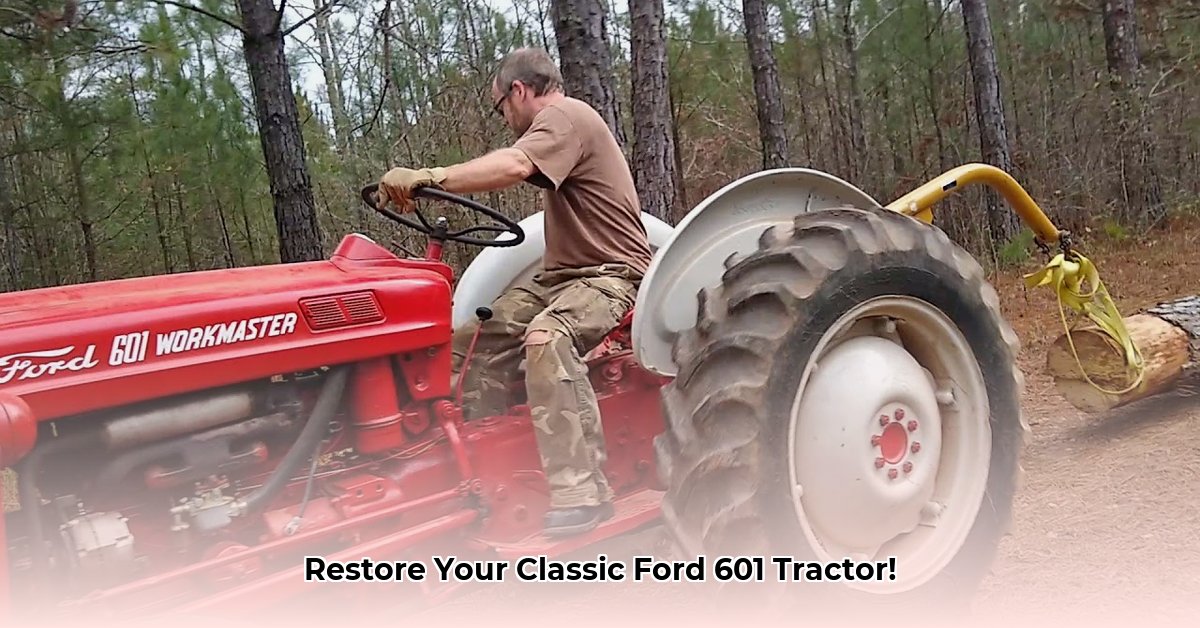
601 Ford Tractor: A Sustainable Farming Adventure?
Thinking about adding a vintage Ford 601 Workmaster tractor to your sustainable farm? It's a charming idea, but let's assess its feasibility. This guide helps you determine if a 601 is the right fit for your farming goals, offering a practical approach to restoration and sustainable use. We'll also compare its long-term costs and environmental impact to modern alternatives. For more restoration tips, check out this helpful resource: tractor restoration guide.
Is a 601 Ford Tractor Right for Your Farm?
The Ford 601, with its simple design, might appeal to eco-conscious farmers who value fixing rather than replacing. However, its age presents challenges. Parts sourcing is difficult, and fuel economy is likely suboptimal. Before you're charmed by its vintage appeal, honestly evaluate your farm's needs. The 601 excels on smaller farms with less demanding tasks; think small-scale vegetable gardens, not large-scale corn harvests. Is your operation suitable for a tractor with inherent limitations?
Sourcing a Ford 601 Workmaster: The Treasure Hunt
Finding a Ford 601 isn't a trip to a dealership; it's a treasure hunt! Begin with online auction sites, classified ads, and private sellers. Local farm equipment auctions are another potential source. Before purchasing, conduct a thorough inspection. Check for rust, worn parts, and mechanical issues. Remember, restoration costs—including potentially difficult-to-source parts—must be factored into your budget.
Restoring and Maintaining Your Ford 601: A Step-by-Step Guide
Restoring a 601 is a project, not a quick fix. Mechanical skills or a reliable mechanic are essential. Here's a step-by-step guide:
- Assessment: Carefully examine the tractor, identifying all repairs needed. Document your findings with notes, photos, or videos.
- Parts Sourcing: Online marketplaces, salvage yards specializing in vintage tractors, and connecting with other 601 owners are key resources. Consider creative solutions like 3D printing or repurposing parts.
- Engine Work: A simple tune-up or a complete overhaul might be necessary, depending on the engine's condition. Professional help is advisable if you lack mechanical expertise.
- Systemic Restoration: Work on one system (brakes, hydraulics, transmission) at a time for a methodical, thorough repair.
- Testing and Fine-Tuning: Test everything thoroughly before fieldwork. Adjustments based on testing may be needed.
Sustainable Practices with a Ford 601: Minimizing Your Impact
Even an older gasoline tractor can be used sustainably. Here's how:
- Efficient Work Planning: Optimize routes and combine tasks to reduce fuel use and unnecessary trips.
- Consistent Maintenance: Regular maintenance improves engine efficiency and longevity, reducing your environmental footprint.
- Responsible Disposal: Properly dispose of hazardous materials (oil, fluids) according to local regulations.
The Long View: Cost Analysis and Sustainable Impact
Before committing, compare the long-term costs of restoring a Ford 601 to purchasing a newer, more fuel-efficient tractor (even a used one). Consider:
| Factor | Restored Ford 601 | Modern Tractor |
|---|---|---|
| Initial Cost | Lower (potentially high restoration costs) | Higher |
| Fuel Efficiency | Low | High |
| Maintenance Costs | Potentially High | Potentially Lower |
| Environmental Impact | Higher (fuel consumption) | Lower (fuel consumption) |
The decision depends on your farm's size and needs. For very small farms with minimal tilling, a 601 might be viable. For larger operations, the long-term costs and environmental impact may outweigh sentimental value. A careful cost-benefit analysis is crucial.